
Learning a new language can sometimes feel like attempting to solve a Rubik’s cube blindfolded, but throw in the enchanting sounds of Norwegian, and you’ve got a challenge worth diving into. Picture this: you’re standing in a cozy café in Oslo, sipping on a steaming cup of coffee, and effortlessly chatting with locals about the weather, fjords, and maybe even the latest episode of your favorite Norwegian drama. Intrigued? Well, buckle up, because this piece will guide you through the essentials of Norwegian language learning, peppered with strategies and insight to make the journey both enjoyable and effective.
Overview of the Norwegian Language
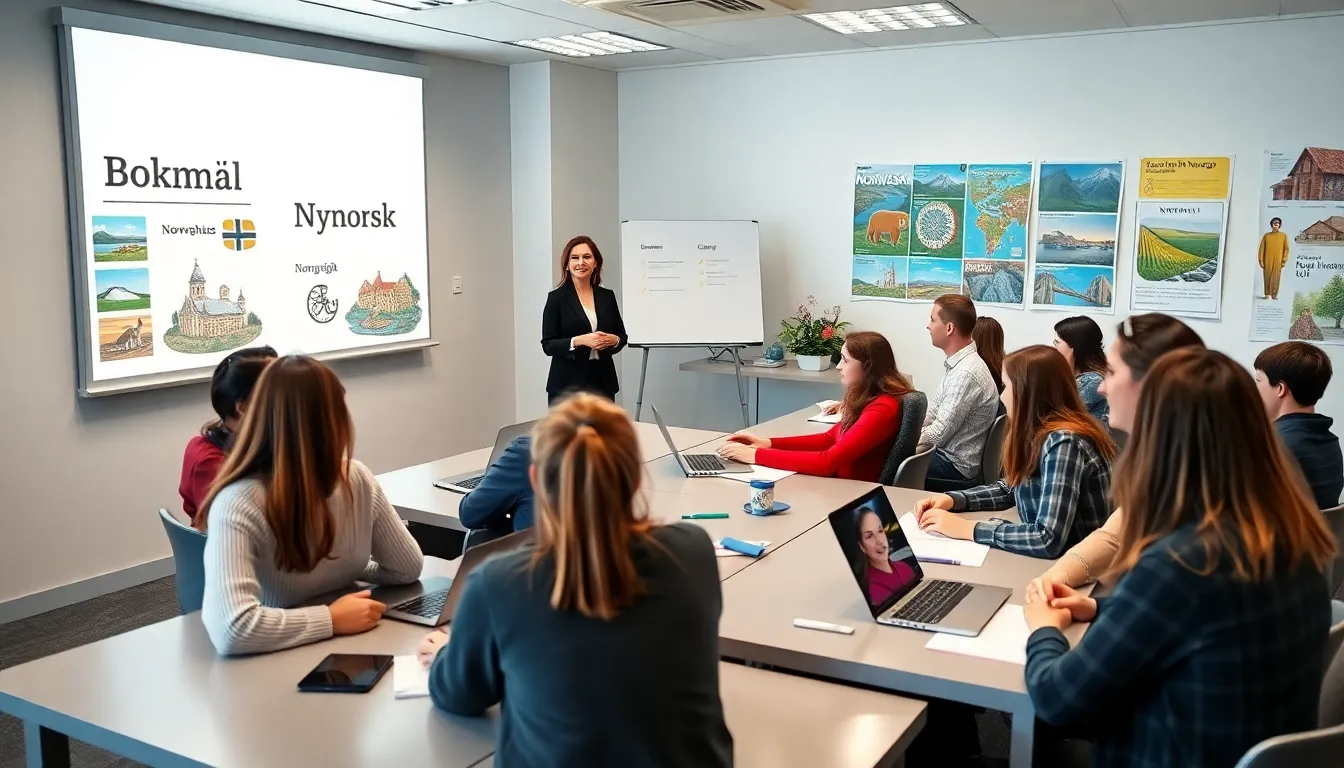
Norwegian is a North Germanic language, closely related to both Swedish and Danish. It boasts approximately 5 million speakers, with the majority residing in Norway. What’s fascinating is that the language has two official written forms: Bokmål and Nynorsk. Bokmål, more heavily influenced by Danish due to historical ties, is the most common. Nynorsk, on the other hand, seeks to reflect the various dialects spoken across Norway. This linguistic diversity adds a rich texture to the language. Learning Norwegian is not just about vocabulary and grammar: it’s about understanding a culture steeped in mythology, stunning landscapes, and, of course, a love for outdoor living.
Importance of Learning Norwegian
Why bother learning Norwegian, you ask? Well, for starters, Norway is famous for its breathtaking fjords, northern lights, and, let’s not forget, the delicious cuisine (rakfisk, anyone?). Speaking the language opens doors to experiencing this stunning country beyond just the tourist attractions. It allows for genuine interactions, giving travelers a deeper understanding of the local culture. Besides, if you’re considering work or study opportunities in Norway, fluency in Norwegian can be a significant leg up. The job market often favors candidates who can communicate in the local language, especially in fields like healthcare, engineering, and education.
Effective Learning Strategies
Mastering a new language is no easy feat: but, with a strategic approach, it can be rewarding. Here are some effective strategies to guide learners on their Norwegian journey.
Resources for Learning Norwegian
The first step towards fluency is tapping into quality resources. Websites such as Duolingo and Babbel offer structured lessons focusing on vocabulary and grammar. These platforms often gamify the learning process, making it far less tedious.
Apps and Online Courses
Mobile apps can be your best friend when tackling Norwegian. For instance, Memrise focuses on vocabulary building through spaced repetition. Online courses, like those offered by the Norwegian University of Life Sciences, are also valuable for learners seeking an academic perspective.
Immersion and Cultural Experiences
Immersion is arguably one of the most effective ways to learn a language. How about attending a Norwegian art exhibition, joining a local book club, or even participating in a cultural festival? These experiences not only enhance language skills through practice but also deepen one’s appreciation of Norwegian traditions. Alternatively, consider spending time in Norway. If budget allows, staying with a host family can offer constant, informal language practice and a peek into daily life in Norway.
Common Challenges for Learners
While embarking on the Norwegian language journey can be exhilarating, learners often face specific challenges. One common hurdle is pronunciation, particularly as Norwegian features unique sounds that may not exist in English. Also, learners might feel overwhelmed by the two written forms, Bokmål and Nynorsk, leading to confusion over which to focus on. Grammar can also pose a challenge, especially with verb conjugations and noun genders that differ significantly from English.
Tips for Overcoming Learning Barriers
Fear not, language learners. Overcoming these challenges lies in a few practical approaches. First, engaging with native speakers can dramatically improve pronunciation and vocabulary usage. Try language exchange meetups or platforms like Tandem. Secondly, don’t get hung up on perfect grammar in the early stages. Focus on communicating your ideas, and refinement can come later. Finally, immersing oneself in Norwegian media, films, music, and books, can transform learning from obligation to an enjoyable pastime.